
A country road isn’t a downtown street.
Here’s something most people never think about until it lands on their own street.
The city doesn’t put in a crosswalk because a road feels dangerous. It runs a formula.
Traffic engineers call it a warrant. Count the cars. Count the people crossing in the busiest six hours. If the numbers clear a set bar, the crossing is “warranted.” If they don’t, you don’t get it, no matter how unsafe the spot feels to the people who live there.
That formula was built for busy places. Downtown corners. Suburban arterials. Roads where hundreds of people cross an hour.
Then the city takes that same formula and drops it on a country road.
Out in a village, you almost never hit those numbers. Not because the road is safe, but because there are fewer people. So the crosswalk that would make a school route safe, or let seniors get across to the community centre, never clears the bar. The community gets told, on paper, that it doesn’t qualify.
That’s what painting the whole city with one brush does. A rule that makes sense on Bank Street quietly leaves a rural road more dangerous, and calls it fair.
You don’t have to take my word for where this ends up.
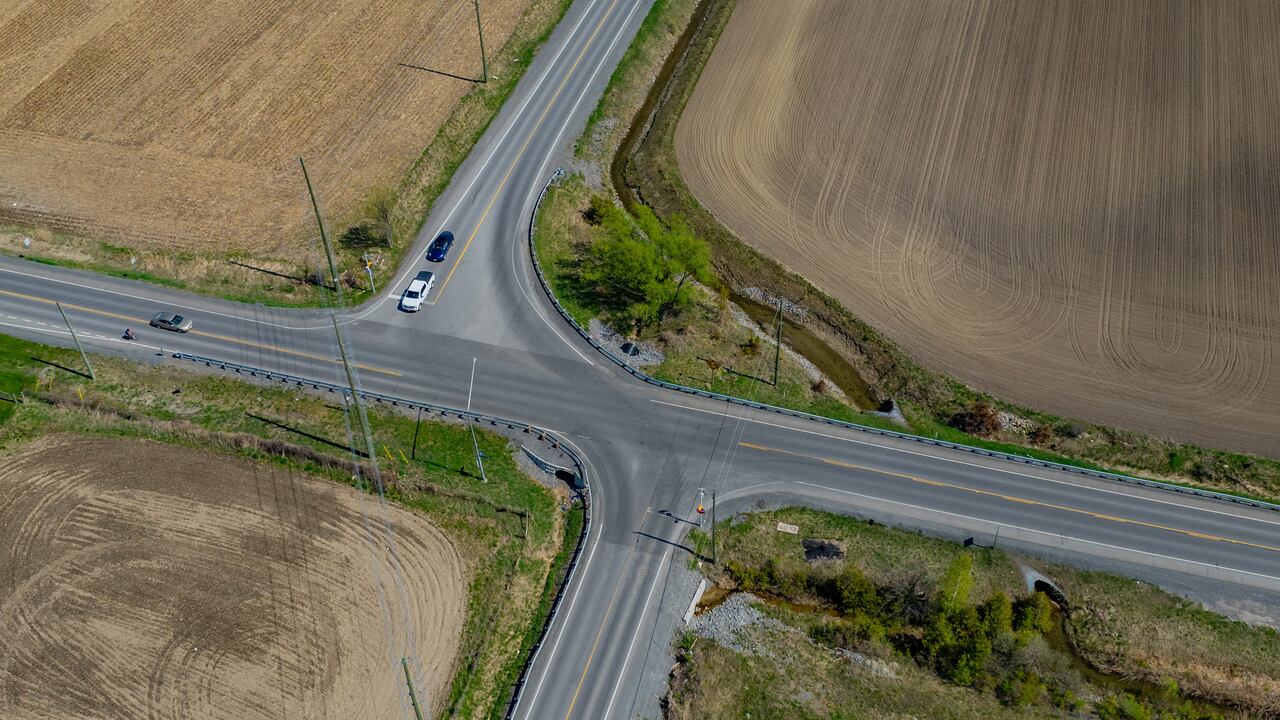
There’s an intersection south of Osgoode, at Dalmeny Road and Nixon Drive, that saw eight collisions in two years. For all that time it still didn’t get a four-way stop. One of the boxes the city checks is whether there have been nine collisions. This corner had eight. One short of a number in a rulebook, while the people who live there kept raising the alarm.
The stop signs are finally going in. But a community shouldn’t have to keep a running tally and wait to hit a threshold before the city will agree a road is dangerous.
And it isn’t one corner. At Flewellyn and Shea near Stittsville, there were 34 collisions in under six years, and the permanent fix isn’t scheduled until 2028. Constance Bay Road and Dunrobin Road was ranked the single most dangerous rural skewed intersection in a City study years ago, and the people who live there are still waiting on it. Villages like Manotick have hundreds of heavy trucks a day rumbling past their homes and schools. Ask in Richmond, North Gower, Kars, or Munster and you’ll hear a version of the same story: a road everyone knows is dangerous, and a wait that never seems to end.
This isn’t about one intersection. About one in five of the fatal and major-injury crashes in this city happen on rural roads, even though far fewer people drive them. The countryside isn’t low-risk. It’s low-count, and the city keeps treating those as the same thing.
I build things for a living. Every code and standard I work with exists for a reason. But any good builder knows a spec that’s right in one place can be wrong, even dangerous, in another. A footing that holds on one site can crack on the next, because the ground underneath is different. You build for the ground you’re actually standing on, not the ground on someone else’s plans.
Rural Culture isn’t only farms and traditions. It’s whether a kid can cross the road to school. Safety shouldn’t depend on whether your village can produce downtown numbers.
As mayor, I’d change how we decide this. Rural roads need a rural standard, one that weighs speed, sightlines, school routes, and how people actually live out there, not just how many of them there are.
If there’s a corner in your community that’s been dangerous for years and keeps getting told it doesn’t qualify, send me an email. I want a list.
I need your help to get the word out. Share this page with your friends. If you’ve got time to help, sign up here. We need doors knocked, signs put up, and neighbours talked to.
Either way, we need you.
We’ve got a lot of work to do.
Ottawa deserves better.
Alex